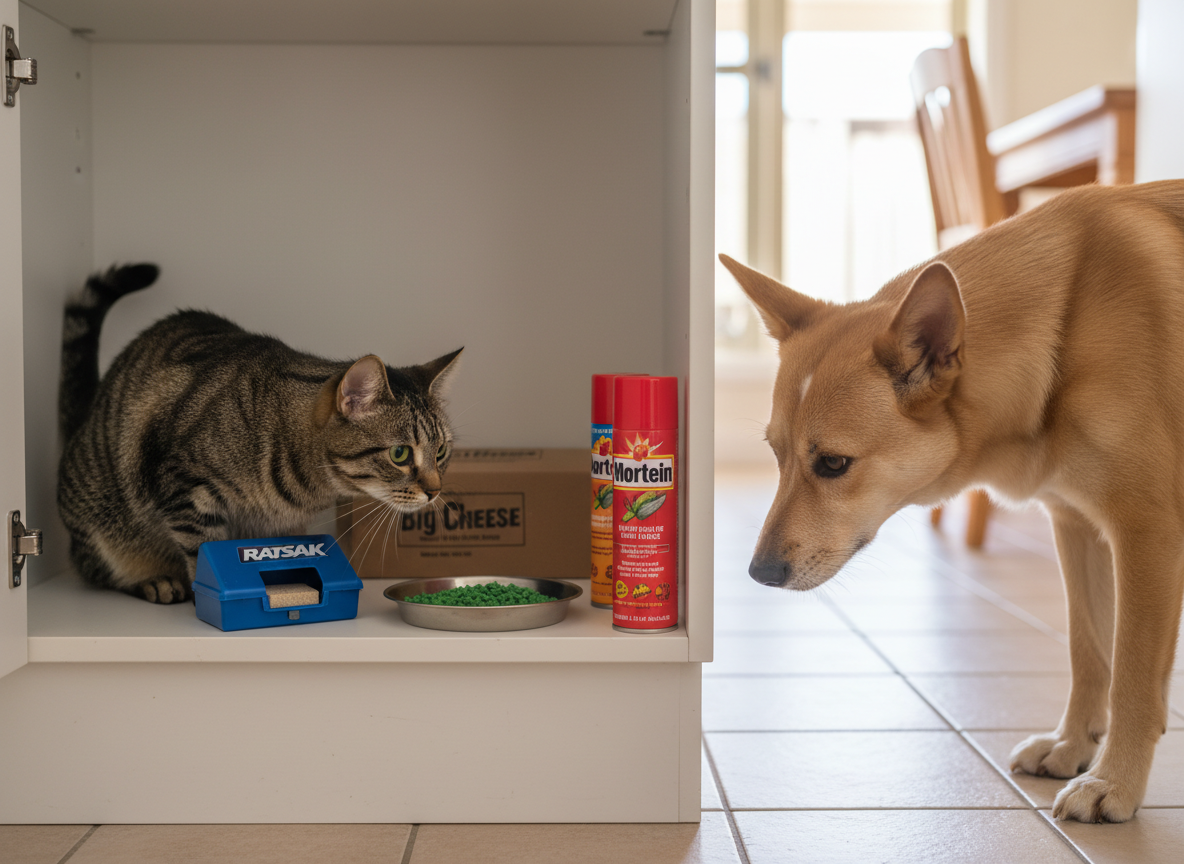
As of 24 March 2026, Australia has taken a major step toward reducing harm from some of the highest-risk rat baits on the market. The products under the spotlight are second-generation anticoagulant rodenticides, or SGARs. These are the stronger anticoagulant baits that have been widely sold for domestic use and are associated with serious poisoning in pets and wildlife.
That matters because these poisons do not just affect rats and mice. Dogs may eat the bait directly. Cats and dogs may also be exposed by eating a poisoned rodent. Native wildlife, especially predatory birds and scavengers, can be affected the same way. In plain English: the poison can keep moving up the food chain.
Why these products are different
Anticoagulant rodenticides work by stopping the body from recycling vitamin K properly. Without that, normal clotting factors cannot be produced, and bleeding follows. The dangerous part is that signs are often delayed. A pet can seem normal at first, then become unwell days later.
There are two broad groups. First-generation anticoagulants generally require repeated feeding to deliver a lethal dose to rodents and tend to break down faster. Second-generation anticoagulants are much more potent, often lethal after a single feed, and persist longer in the body. That longer persistence is a big part of why they are more dangerous to pets and wildlife.
What changed in Australia
The APVMA has certified that it is in the public interest for SGAR products to become restricted chemical products, which means tighter purchase and use controls linked to training and licensing. In parallel, the APVMA announced a one-year suspension from 24 March 2026 for all SGAR products while stronger controls are worked through.
That is the big-picture reason this is good news. Less easy public access to the highest-risk bait should mean fewer severe poisonings in dogs, cats and wildlife. It does not mean rodent control disappears. It means the higher-risk products are being treated more seriously.
What poisoning can look like in pets
With anticoagulant rodenticides, the main problem is bleeding. Signs can include lethargy, weakness, pale gums, breathing difficulty, nosebleeds, bruising, blood in vomit, urine or stool, or collapse. Sometimes the bleeding is internal, so the signs can be vague at first. If there is any chance your pet has had access to rat bait, do not wait for obvious bleeding before acting.
If you suspect exposure, keep the packet or take a photo of it. The active ingredient matters. “Rat bait” is not one thing. Different products contain different toxins, and treatment decisions depend on knowing which one was involved.
Safer rodent control options
For most households, the safest long-term approach is still the least glamorous one: make your property harder for rodents to use. Seal gaps, remove easy food sources, store feed securely, clean up fallen fruit, reduce clutter, and stop rodents getting comfortable in the first place. That is not exciting, but it works better than repeatedly throwing poison at the same problem.
For indoor control, well-placed snap traps or enclosed electric traps are generally safer from a pet and wildlife point of view than anticoagulant baits because there is no secondary poisoning risk. Glue traps are not something I’d recommend. They are a welfare problem, and they catch the wrong animals too. Outdoor chemical control is more complicated and should never be treated casually just because something is sold as an alternative.
The practical takeaway
This regulatory change is a positive one. The strongest anticoagulant rat baits carry a disproportionate risk for pets and wildlife, and reducing general public access makes sense. But there is still plenty of room for accidental poisoning from older stock, other bait types, and poorly planned rodent control.
If your dog or cat may have eaten bait, or a poisoned rodent, treat it as urgent. Early advice matters. If you are in Brisbane, Ipswich, Logan or nearby and need calm, practical help, you can contact Personalised Mobile Vet.
Harvard-style references
Australian Pesticides and Veterinary Medicines Authority (APVMA) 2025, Rodenticides, APVMA, viewed 6 April 2026, https://www.apvma.gov.au/resources/frequently-searched-chemicals/rodenticides.
Australian Pesticides and Veterinary Medicines Authority (APVMA) 2026, APVMA certifies that second generation anticoagulant rodenticides should be restricted chemical products, APVMA, viewed 6 April 2026, https://www.apvma.gov.au/news-and-publications/news/apvma-certifies-second-generation-anticoagulant-rodenticides-should-be-restricted-chemical-products.
Australian Pesticides and Veterinary Medicines Authority (APVMA) 2026, FAQs – Anticoagulant rodenticides and actions by the APVMA, APVMA, viewed 6 April 2026, https://www.apvma.gov.au/news-and-publications/public-consultations/anticoagulant-rodenticides-proposed-regulatory-decision/faqs.
Australian Veterinary Association (AVA) 2026, APVMA to ban public sale of rodenticides, AVA, viewed 6 April 2026, https://www.ava.com.au/news/apvma-to-ban-public-sale-of-rodenticides/.
Merck Veterinary Manual 2026, Anticoagulant rodenticide poisoning in animals, Merck Veterinary Manual, viewed 6 April 2026, https://www.merckvetmanual.com/toxicology/rodenticide-poisoning/anticoagulant-rodenticide-poisoning-in-animals.
Lohr, MT 2018, ‘Anticoagulant rodenticide exposure in an Australian predatory bird increases with proximity to developed habitat’, Science of The Total Environment, viewed via PubMed 6 April 2026, https://pubmed.ncbi.nlm.nih.gov/29936157/.











Leave a Reply